Central Law Agency
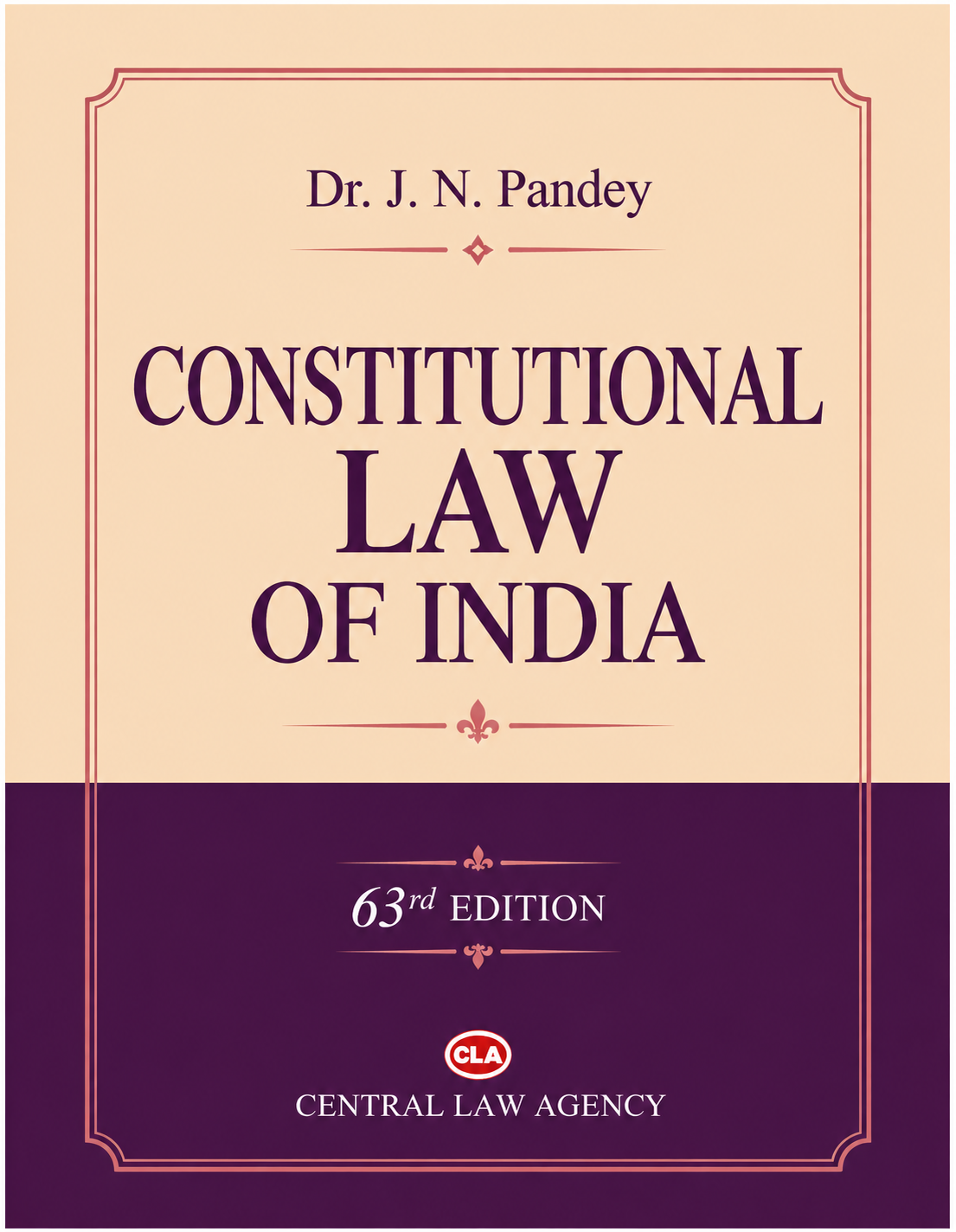
Constitutional Law of India | Dr. J.N. Pandey | Central Law Agency | 63rd Edition
Constitutional Law of India | Dr. J.N. Pandey | Central Law Agency | 63rd Edition
Couldn't load pickup availability
Constitutional Law of India, 63rd Edition
An indispensable guide to the Indian Constitution, Dr. J.N. Pandey's Constitutional Law of India is an authoritative text offering clear insights into fundamental principles, rights, and freedoms. Widely trusted by law students, professionals, and scholars, it combines meticulous research with lucid explanations to simplify complex legal concepts. Whether for exam preparation or a deeper understanding of constitutional jurisprudence, this resource is a valuable companion for law students, judicial aspirants, legal professionals, and law school libraries.
Product Details
- Author: Dr. J.N. Pandey
- Format: Paperback
- Pages: 959 pages
- Publisher: Central Law Agency
- Language: English
- ISBN: 9789392140440
- Publisher Code: 9789392140440
- Dimensions: 23.8 x 15.5 x 4.3 cm
- Edition: 63rd Edition
Key Features
- Spread over 41 comprehensive chapters, written in a lucid yet detailed style, covering vital legal-historical narratives from 1600 to the present.
- Updated with the latest landmark judicial decisions.
- Includes recent legislative changes and constitutional amendments.
- Features precise headnotes and an exam-oriented structure.
What's New in this Edition?
The 63rd edition is fully updated with significant constitutional pronouncements of 2025-2026. It includes developments concerning the inadmissibility of involuntary narco-analysis tests under Articles 20(3) and 21, the expanding jurisprudence on the right to shelter and humane living conditions in Beggars' Homes, and the Supreme Court's evolving framework on passive euthanasia and withdrawal of life support in permanent vegetative states.
This edition also covers constitutional developments concerning the status of long-serving contractual teachers under Article 23, environmental rule of law in encroachment removal, maternity leave rights after remarriage, National Task Force guidelines on student suicides in higher education, and the judiciary's directive against referring to trial courts as "Lower Courts." It includes an in-depth analysis of the evolving jurisprudence on Presidential Reference, along with rulings on gubernatorial discretion, timelines and deemed assent under Article 200, judicial service eligibility under Article 233, removal of Public Service Commission members under Article 317, and Vice-Chancellor appointment disputes involving Entry 66 of List I.
Table of Contents
- Introduction
- The Nature of the Indian Constitution
- Salient Features of the Indian Constitution
- The Preamble of the Constitution
- The Union and Its Territory (Articles 1-4)
- Citizenship (Articles 5-11)
- Fundamental Rights (Articles 12-13)
- Right to Equality (Articles 14-18)
- Right to Freedom (Article 19)
- Protection in Respect of Conviction for Offences (Article 20)
- Protection of Life and Personal Liberty (Article 21)
- Safeguards against Arbitrary Arrest and Detention (Article 22)
- Right Against Exploitation (Articles 23-24)
- Right to Freedom of Religion (Articles 25-28)
- Cultural and Educational Rights (Articles 29-30)
- Saving of Certain Laws (Articles 31-A-31-C)
- Right to Constitutional Remedies (Articles 32-35)
- Directive Principles of State Policy (Articles 36-51)
- Fundamental Duties (Article 51A)
- The Union Executive, the President, Vice-President and Council of Ministers
- The Parliament (Articles 79-122)
- The Union Judiciary, the Supreme Court (Articles 124-147)
- The State Executive
- The State Legislature
- Privileges of the Parliament Legislature (Articles 105 and 194)
- The State Judiciary (Articles 214-237)
- The Union Territories and Tribal Areas
- Panchayats, Municipalities and Co-operative Societies
- Relations between the Union and the States
- Property, Contracts, Rights, Liabilities and Suits of the State
- Right to Property (Article 300A)
- Freedom of Trade, Commerce and Intercourse
- Services under the Union and the States
- Tribunals
- Elections
- Special Provisions Relating to Certain Classes
- Official Language
- The Emergency Provisions
Share